

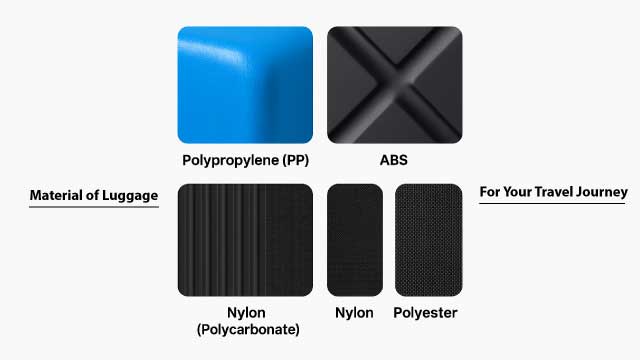
1. Polypropylene (PP) Material
What Is PP Material?
Polypropylene (PP) is a lightweight, impact-resistant thermoplastic commonly used in budget to mid-range luggage. It’s known for its flexibility and scratch resistance, making it ideal for frequent travelers who need a durable yet affordable option.
How to Identify PP by Touch?
- Slightly flexible when pressed (unlike rigid ABS/PC).
- Matte or semi-gloss finish (rarely high-shine).
- Feels smooth but not slippery (compared to PC).
Durability & Performance
- Impact Resistance: Good (flexes instead of cracking).
- Scratch Resistance: Moderate (better than ABS).
- Weight: Very light (best for weight-conscious flyers).
- Water Resistance: Naturally water-repellent.
Best For?
- Budget travelers
- Short trips (carry-on luggage)
- Those who prefer lightweight options
2. ABS Material (Acrylonitrile Butadiene Styrene)
What Is ABS Material?
ABS is a hard, rigid plastic used in affordable luggage. It’s more brittle than PP or PC but offers a glossy, high-end look at a lower cost.
How to Identify ABS by Touch?
- Hard and rigid (does not flex under pressure).
- Glossy surface (prone to visible scratches).
- Feels colder than PP/PC (less insulation).
Durability & Performance
- Impact Resistance: Low (can crack under heavy force).
- Scratch Resistance: Poor (shows marks easily).
- Weight: Medium (heavier than PP but lighter than metal).
- Water Resistance: Non-porous but not fully waterproof.
Best For?
- Occasional travelers
- Those who prefer a glossy aesthetic
- Short business trips
3. Polycarbonate (PC) Material
What Is PC Material?
Polycarbonate is a premium, high-impact plastic used in luxury and rugged luggage (e.g., Rimowa, Samsonite). It’s stronger than ABS/PP and offers excellent durability.
How to Identify PC by Touch?
- Smooth, slightly flexible (flexes but bounces back).
- High-gloss or matte finish (depends on brand).
- Feels "dense" and sturdy (unlike hollow ABS).
Durability & Performance
- Impact Resistance: Excellent (won’t crack easily).
- Scratch Resistance: Moderate (can show marks but less than ABS).
- Weight: Light (lighter than aluminum).
- Water Resistance: Naturally waterproof.
Best For?
- Frequent flyers
- Luxury travelers
- Those needing maximum protection
4. Aluminum-Magnesium Alloy Material
What Is Aluminum-Magnesium Alloy?
This metal alloy is used in high-end, ultra-durable luggage (e.g., Rimowa Classic, Tumi). It’s strong, stylish, and dent-resistant but heavier than plastic.
How to Identify It by Touch?
- Cold, metallic feel (unlike plastic).
- Smooth but firm (no flexibility).
- Distinctive "metallic ring" when tapped.
Durability & Performance
- Impact Resistance: Very high (but can dent).
- Scratch Resistance: Low (shows wear over time).
- Weight: Heavy (not ideal for weight limits).
- Water Resistance: Fully waterproof.
Best For?
- Luxury travelers
- Those who value premium aesthetics
- Long-haul flights (if weight isn’t an issue)
5. Nylon Material (Ballistic & Cordura)
What Is Nylon Luggage?
Nylon is a soft yet tough fabric used in backpacks and duffel bags. Ballistic nylon (used in Tumi, Briggs & Riley) is highly abrasion-resistant.
How to Identify Nylon by Touch?
- Soft, slightly textured feel (unlike hard plastics).
- Flexible but sturdy (can be squeezed but holds shape).
- Matte finish (rarely glossy).
Durability & Performance
- Impact Resistance: Good (absorbs shocks).
- Scratch Resistance: High (hides marks well).
- Weight: Light to medium (depends on thickness).
- Water Resistance: Often treated (but not fully waterproof).
Best For?
- Adventure travelers
- Backpack-style luggage users
- Those who need flexible storage
Comparison Chart: Which Material Is Best?
| Material | Durability | Weight | Scratch Resistance | Water Resistance | Best For |
|---|---|---|---|---|---|
| PP | Good | Very Light | Moderate | High | Budget travelers |
| ABS | Low | Medium | Poor | Medium | Occasional use |
| PC | Excellent | Light | Moderate | High | Frequent flyers |
| Aluminum-Magnesium | Very High | Heavy | Low | Fully Waterproof | Luxury trips |
| Nylon | High | Light-Medium | High | Water-Resistant | Adventure travel |
Comparison Chart: Durability & Care Summary
| Material | Durability | Cleaning Method | Biggest Risk | Storage Tip |
|---|---|---|---|---|
| PP | Good | Damp microfiber | Heat warping | Dust bag |
| ABS | Low | Mild soap + water | Cracking | Avoid sharp objects |
| PC | Excellent | Isopropyl alcohol | Scratches | Store upright |
| Aluminum-Magnesium | Very High | Metal polish | Dents | Soft case |
| Nylon | High | Fabric cleaner | Mold | Keep unzipped |
Final Buying Guide for 2025
- Choose PP if you want lightweight & affordable.
- Pick ABS for budget-friendly glossy luggage.
- Go for PC if you need maximum durability.
- Select Aluminum for luxury & prestige.